Co-Founder & CEO, CodePinion / Co-Founder & CTO, Harlem Manage
Building the developer platform and the property operating system that African software teams and property firms run on.
Companies building
2
Platforms live in production
2
Years coding
6+
Live systems pulse
Operating model
RealtimeArchitecture loop
Selected systems
Production-minded work
Harlem Manage
The company I lead as CTO. Harlem Manage is a Kenya-first operating system for property firms — multi-tenant core, role-aware AI execution, real-time M-PESA payment flows, and a production observability stack — scaling as the system landlords and agencies run their business on.
CodePinion
The company I founded and lead as CEO. CodePinion unifies git hosting, cloud dev environments, provisioned infrastructure, and project management into one AI-native platform — live in production on Kubernetes and scaling toward becoming the default place African software teams build and ship.
Catalog-Point
A full-stack library operations system with 5 core relational models, 2 user role types, a borrowing transaction engine with date-based cost calculation, and a deployment-ready Django stack.
E-Commerce Backend System
A backend commerce API built across 3 service domains (catalog, cart, order) with JWT-authenticated role-aware authorization, a relational schema optimized for checkout and order lifecycle workflows, and a separate React frontend — 2 public repos.
ML Search Engine
A 2-stage hybrid retrieval system trained on 45,000 StackOverflow records — SGD-based tag prediction for query expansion feeding into TF-IDF vectorization with cosine similarity ranking.
Movie Recommendation System
A 3-stage content-based recommendation pipeline — metadata extraction, vector representation, and cosine similarity scoring — that generates explainable suggestions with no user interaction data required.
2
Companies I found and lead
Live
Both platforms running in production
Kubernetes
Infrastructure both products scale on
M-PESA
Payment rail built for the African market
80%
Faster report delivery at Slade360
6+
Years coding, since 2020
I build companies on architecture that survives growth: multi-tenant isolation, robust data flows, role-aware systems, and software that can be reasoned about, debugged, and extended long after the first version ships.
Co-Founder & CEO
An AI-native developer platform putting git hosting, cloud environments, infrastructure, and planning in one product — built for the teams every incumbent serves last.
Co-Founder & CTO
A Kenya-first operating system for property firms, with M-PESA as a native payment rail and AI execution built into the workflows.
What I'm building toward
Infrastructure companies for the African market — designed for how these teams actually operate, and architected to scale without a rewrite.
These projects highlight how I approach architecture, domain problems, and production-ready implementation.
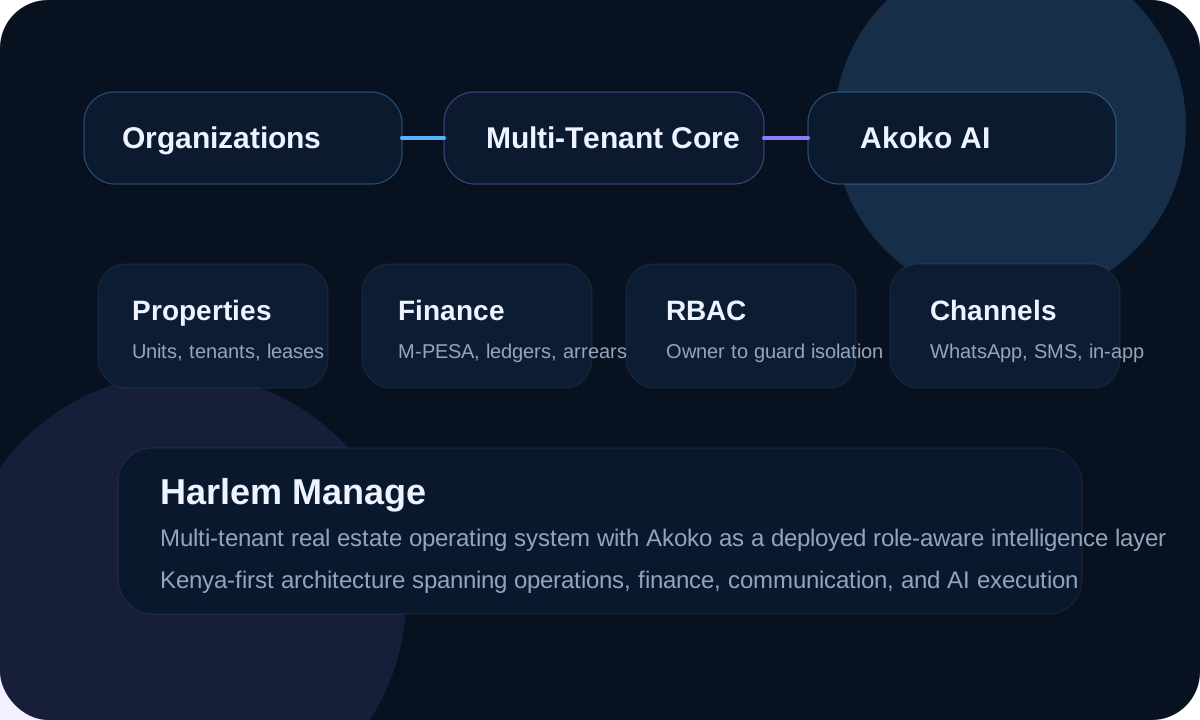
The company I lead as CTO. Harlem Manage is a Kenya-first operating system for property firms — multi-tenant core, role-aware AI execution, real-time M-PESA payment flows, and a production observability stack — scaling as the system landlords and agencies run their business on.
Harlem Manage is a Kenya-first, multi-tenant real estate operating system built for landlords, agencies, and property firms. It combines property workflows, tenant and lease management, financial reconciliation, communication channels, and Akoko, a deployed operational intelligence layer that adapts by role. We are building it as core infrastructure for African rental operations, not a management panel with a local coat of paint.
Multi-tenant
Organisation and property isolation
M-PESA
Native payment rail
Role-aware AI
Akoko execution layer
Architecture highlights
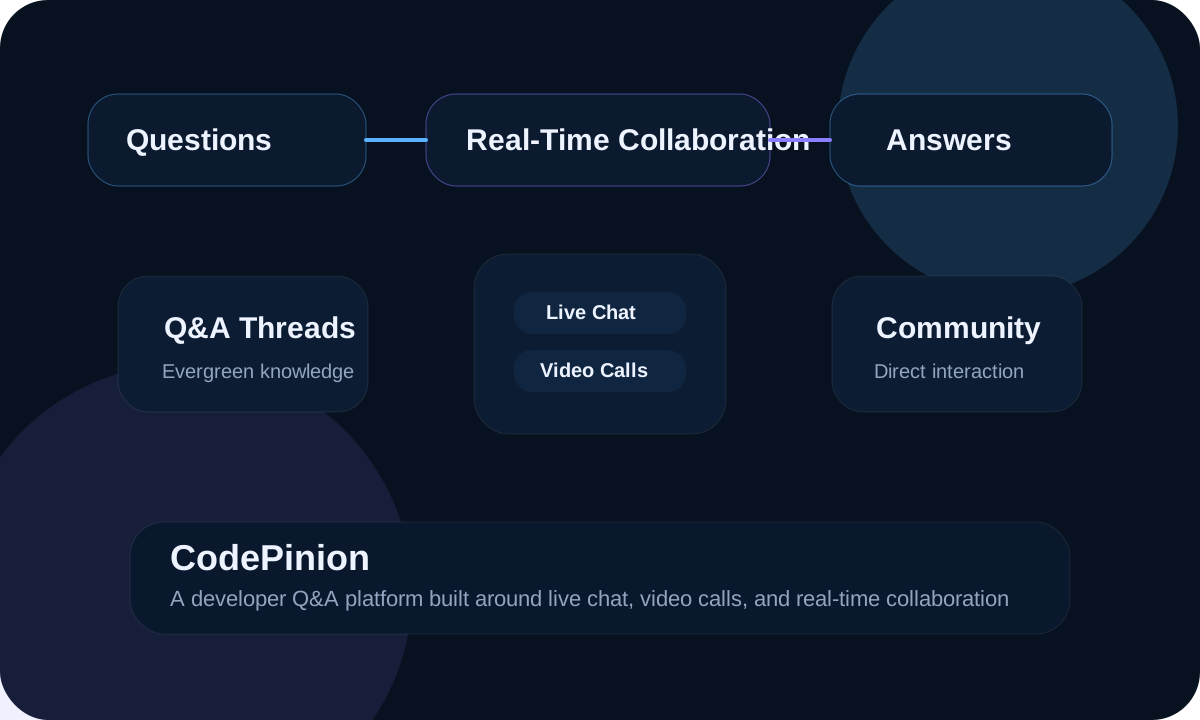
The company I founded and lead as CEO. CodePinion unifies git hosting, cloud dev environments, provisioned infrastructure, and project management into one AI-native platform — live in production on Kubernetes and scaling toward becoming the default place African software teams build and ship.
CodePinion collapses the toolchain a team normally assembles from four vendors — a git host, a cloud IDE, a PaaS, and a project tracker — into a single product where AI is a first-class citizen rather than a bolted-on sidebar. Teams get on-demand containerised workspaces with live terminals and LSP support, a full git hosting layer with PR review and CI/CD, and one-click provisioned databases and app hosting. We are building it for a market that has been served last by every incumbent developer platform.
AI-native
Agentic execution layer
Kubernetes
Production infrastructure
M-PESA
Built for the African market
Architecture highlights
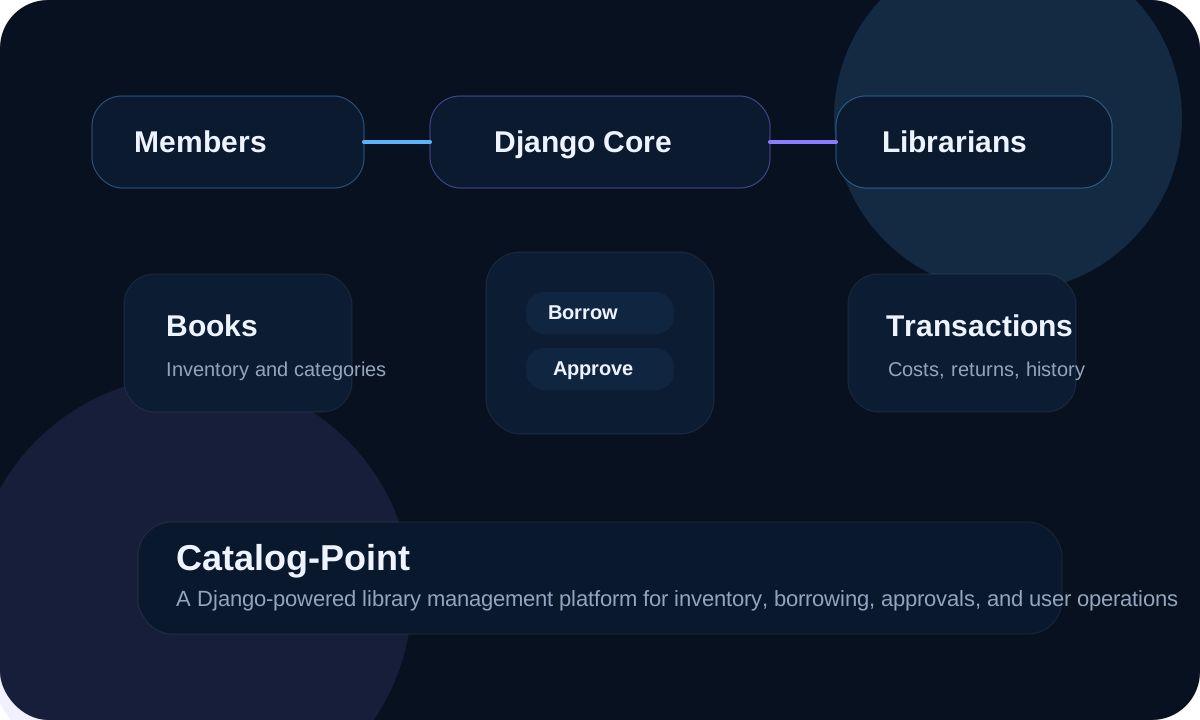
A full-stack library operations system with 5 core relational models, 2 user role types, a borrowing transaction engine with date-based cost calculation, and a deployment-ready Django stack.
Catalog-Point is a Django-based library management system covering the full operational surface of a real library: inventory tracking, category management, borrowing workflows, cost calculation, approval states, return handling, and user activity history — for both librarians and members.
5
Core relational models
2
User role types
Deployed
Gunicorn + WhiteNoise
Architecture highlights
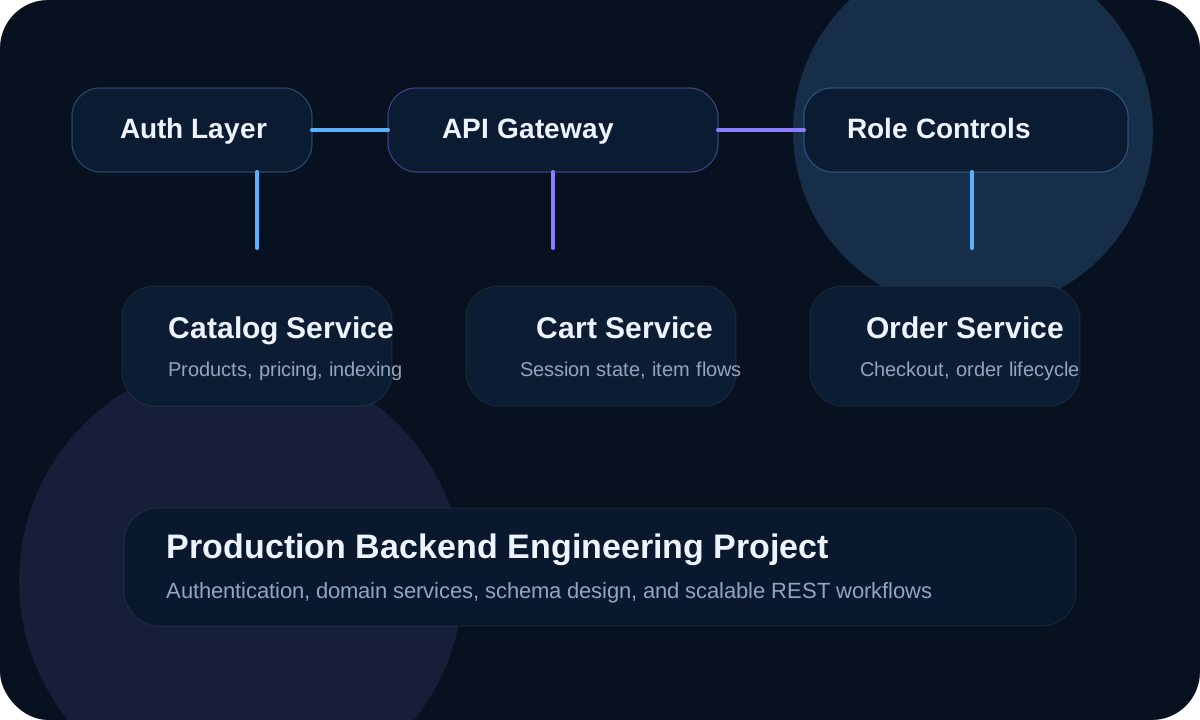
A backend commerce API built across 3 service domains (catalog, cart, order) with JWT-authenticated role-aware authorization, a relational schema optimized for checkout and order lifecycle workflows, and a separate React frontend — 2 public repos.
A backend-first commerce platform focused on clear domain separation, predictable API behavior, and a schema that supports catalog, cart, and order lifecycles without coupling everything into a single service layer. Paired with a public React frontend repo.
3
Service domains
JWT + RBAC
Auth layer
2 repos
Frontend + backend
Architecture highlights
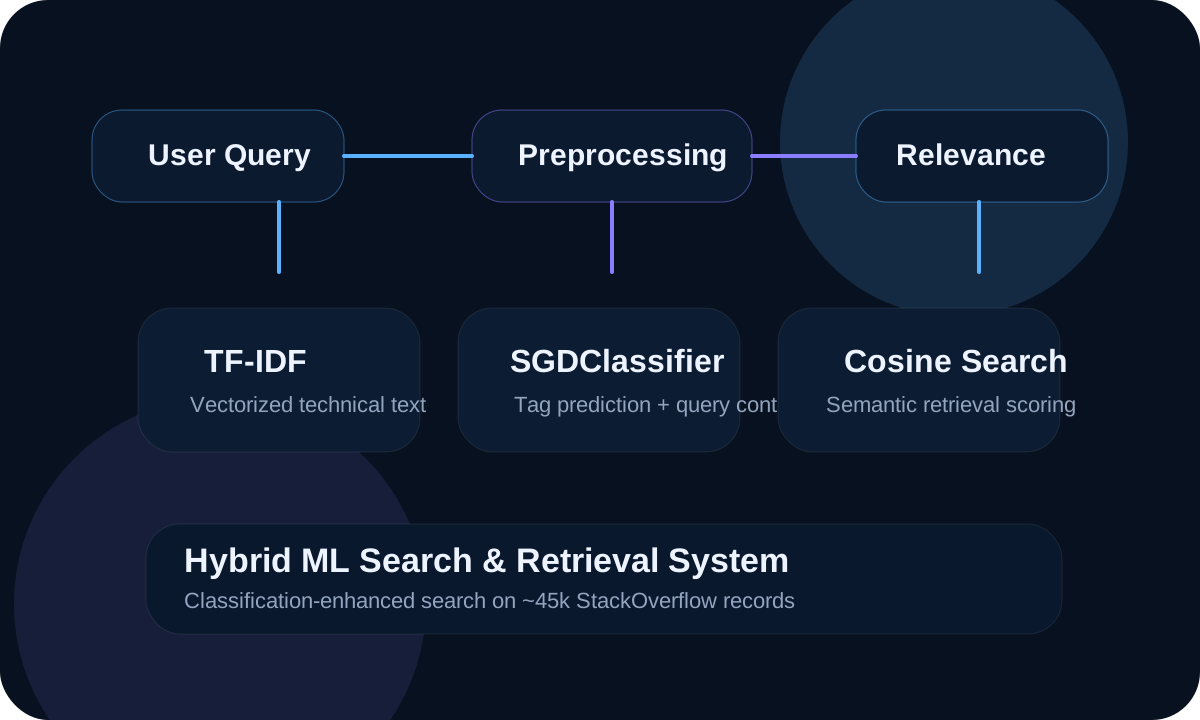
A 2-stage hybrid retrieval system trained on 45,000 StackOverflow records — SGD-based tag prediction for query expansion feeding into TF-IDF vectorization with cosine similarity ranking.
A machine learning search system built on ~45,000 StackOverflow records. The key insight was that a single retrieval technique misses intent — so the pipeline runs in 2 stages: classify the query to predict missing context tags, then use those enriched tags to improve the similarity search.
45K+
Training records
2-stage
Hybrid retrieval pipeline
SGD + TF-IDF
Model combination
Architecture highlights
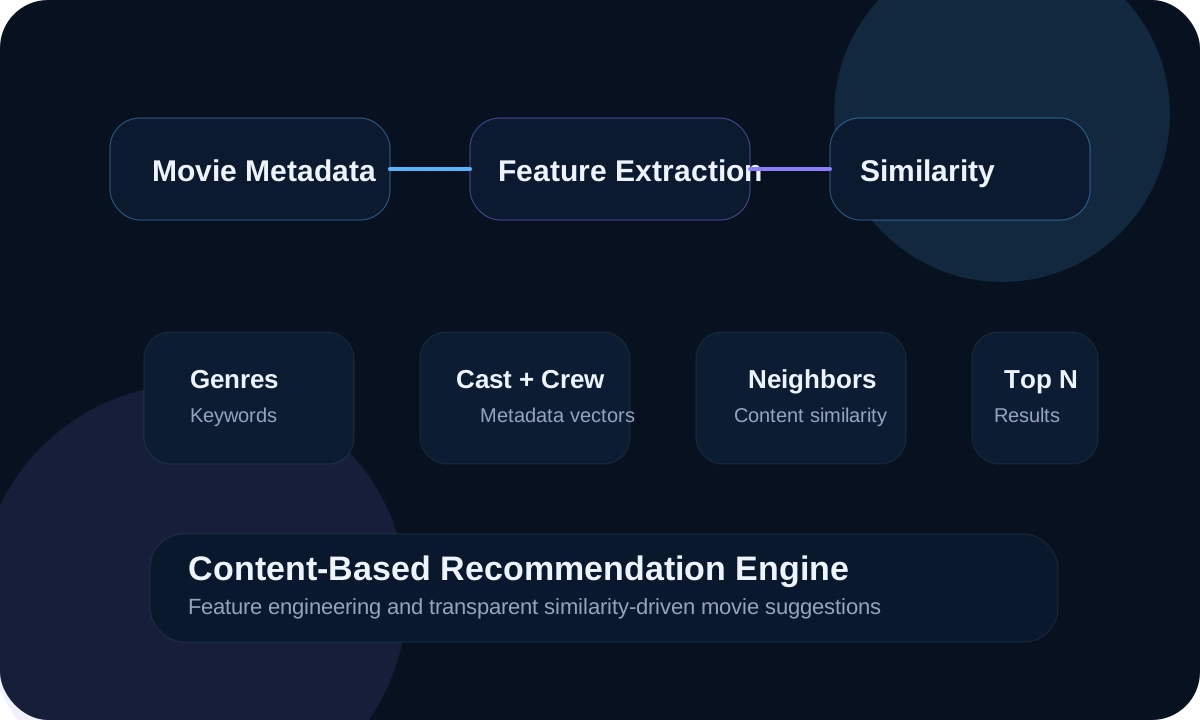
A 3-stage content-based recommendation pipeline — metadata extraction, vector representation, and cosine similarity scoring — that generates explainable suggestions with no user interaction data required.
A content-based recommender that processes movie metadata through 3 explicit pipeline stages: feature extraction, vector representation, and similarity scoring. The design prioritizes explainability — every suggestion is traceable to specific shared metadata signals rather than opaque collaborative filtering.
3
Pipeline stages
Content-based
No user data needed
Explainable
Traceable recommendations
Architecture highlights
The combination of CTO-level product building, informatics systems, and fintech experience informs how I think about data integrity, workflows, and software reliability.
Apr 2026 — Current
Co-Founder & CEO
Jun 2025 — Current (part-time)
Co-Founder & CTO
Oct 2025 – Jul 2026
Software Engineer
3 months
Software Engineer Intern / Contract
Capabilities
Backend Engineering
REST API Design / Systems Design / Django / PostgreSQL / MySQL / Redis / RabbitMQ
ML / Data Science
TF-IDF & NLP / Classification / Similarity Models / scikit-learn / TensorFlow / OpenAI API
Programming
Data Structures & Algorithms / Python / Elixir / TypeScript / JavaScript / Java / React / Next.js / HTML / CSS
Cloud & Infrastructure
AWS / EC2 / PostgreSQL RDS / S3 / Object Storage / Linux Server Administration / Nginx / Gunicorn / Daphne / SSL & Server Hardening / systemd / CI/CD & Deployment Automation / Grafana & Loki
Tools
Git / Linux / Docker / Grafana / Sentry / GlitchTip / Codex / Claude Code
Meta can talk through Alex's experience, ongoing flagship work, technical projects, stack decisions, and the best way to get in touch.
AI Assistant
Ask Meta about Harlem Manage, backend work, ML projects, skills, or how to contact Alex.
