These projects are framed the way hiring teams evaluate engineering work: problem definition, architecture quality, implementation choices, and what the system proves.
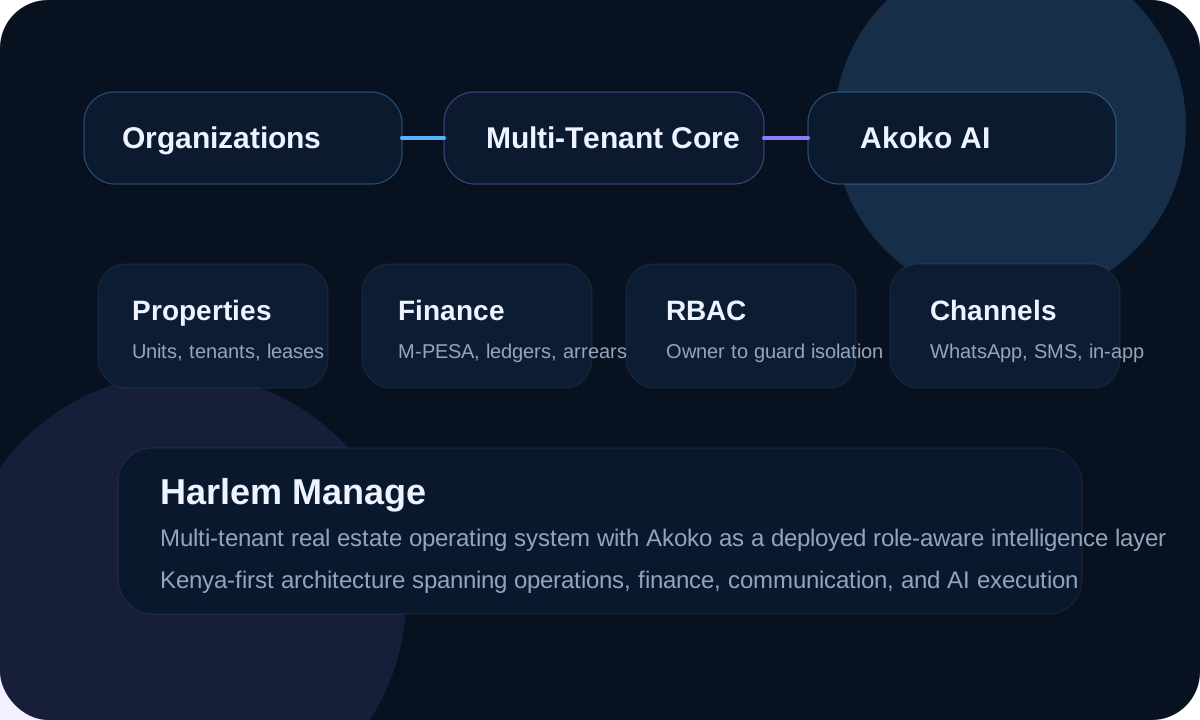
The company I lead as CTO. Harlem Manage is a Kenya-first operating system for property firms — multi-tenant core, role-aware AI execution, real-time M-PESA payment flows, and a production observability stack — scaling as the system landlords and agencies run their business on.
Harlem Manage is a Kenya-first, multi-tenant real estate operating system built for landlords, agencies, and property firms. It combines property workflows, tenant and lease management, financial reconciliation, communication channels, and Akoko, a deployed operational intelligence layer that adapts by role. We are building it as core infrastructure for African rental operations, not a management panel with a local coat of paint.
Multi-tenant
Organisation and property isolation
M-PESA
Native payment rail
Role-aware AI
Akoko execution layer
Architecture highlights
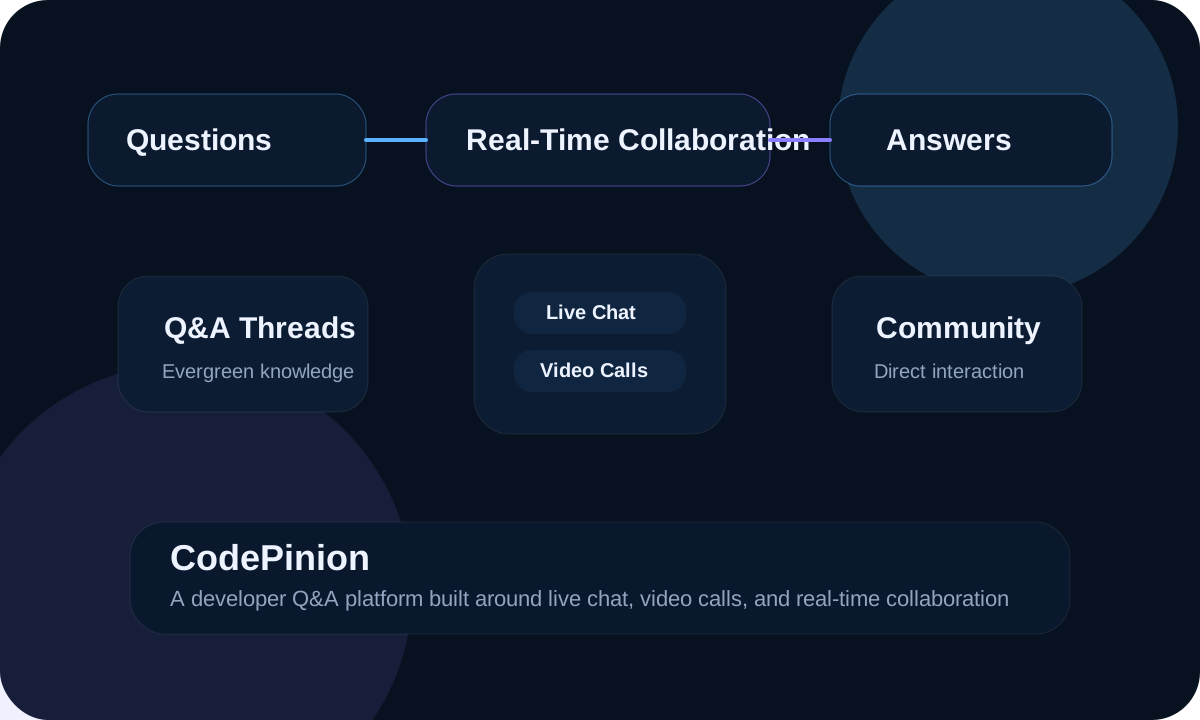
The company I founded and lead as CEO. CodePinion unifies git hosting, cloud dev environments, provisioned infrastructure, and project management into one AI-native platform — live in production on Kubernetes and scaling toward becoming the default place African software teams build and ship.
CodePinion collapses the toolchain a team normally assembles from four vendors — a git host, a cloud IDE, a PaaS, and a project tracker — into a single product where AI is a first-class citizen rather than a bolted-on sidebar. Teams get on-demand containerised workspaces with live terminals and LSP support, a full git hosting layer with PR review and CI/CD, and one-click provisioned databases and app hosting. We are building it for a market that has been served last by every incumbent developer platform.
AI-native
Agentic execution layer
Kubernetes
Production infrastructure
M-PESA
Built for the African market
Architecture highlights
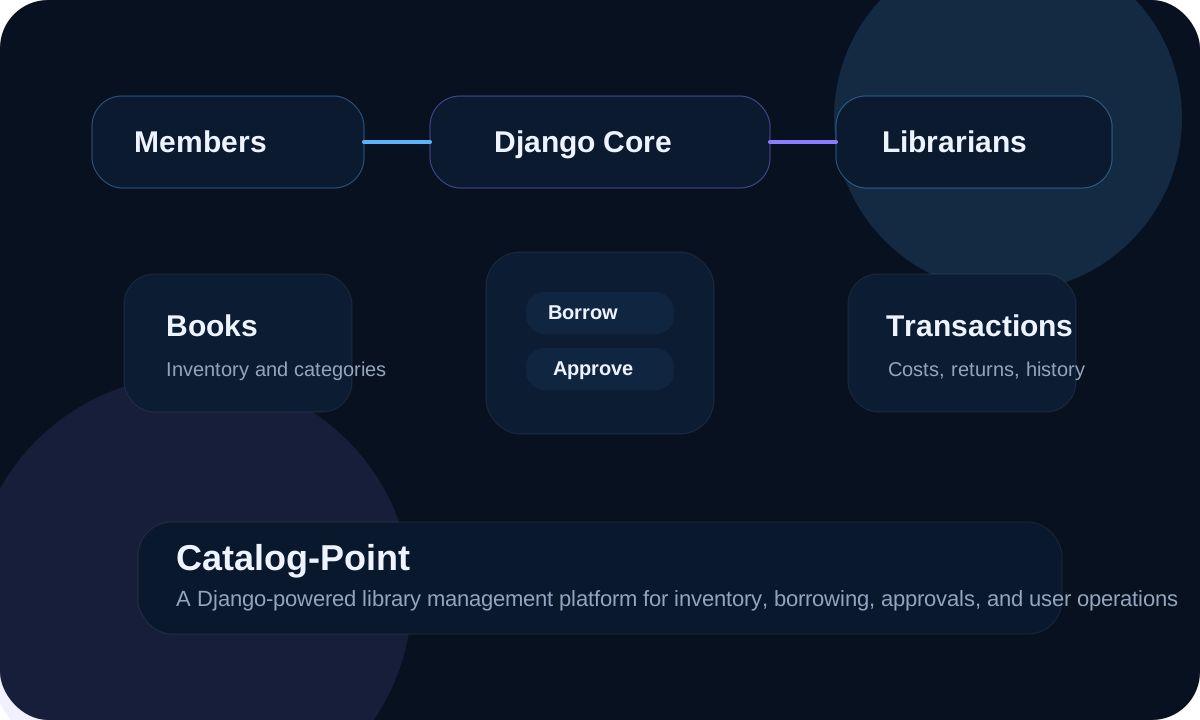
A full-stack library operations system with 5 core relational models, 2 user role types, a borrowing transaction engine with date-based cost calculation, and a deployment-ready Django stack.
Catalog-Point is a Django-based library management system covering the full operational surface of a real library: inventory tracking, category management, borrowing workflows, cost calculation, approval states, return handling, and user activity history — for both librarians and members.
5
Core relational models
2
User role types
Deployed
Gunicorn + WhiteNoise
Architecture highlights
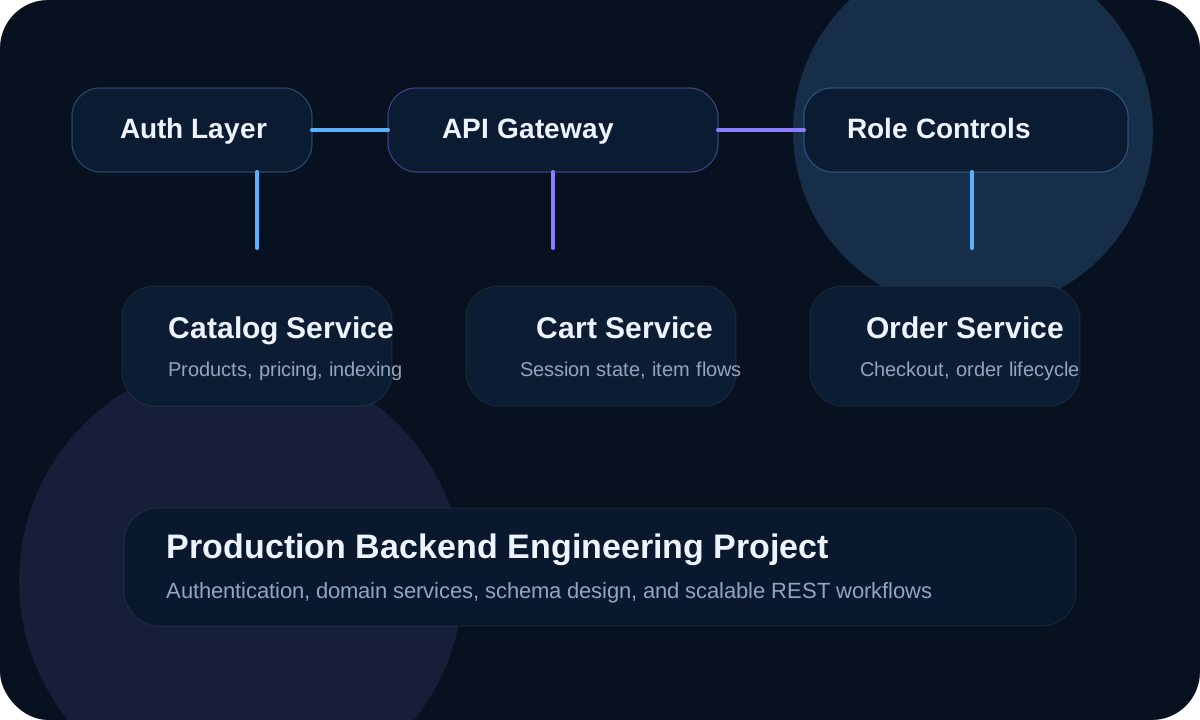
A backend commerce API built across 3 service domains (catalog, cart, order) with JWT-authenticated role-aware authorization, a relational schema optimized for checkout and order lifecycle workflows, and a separate React frontend — 2 public repos.
A backend-first commerce platform focused on clear domain separation, predictable API behavior, and a schema that supports catalog, cart, and order lifecycles without coupling everything into a single service layer. Paired with a public React frontend repo.
3
Service domains
JWT + RBAC
Auth layer
2 repos
Frontend + backend
Architecture highlights
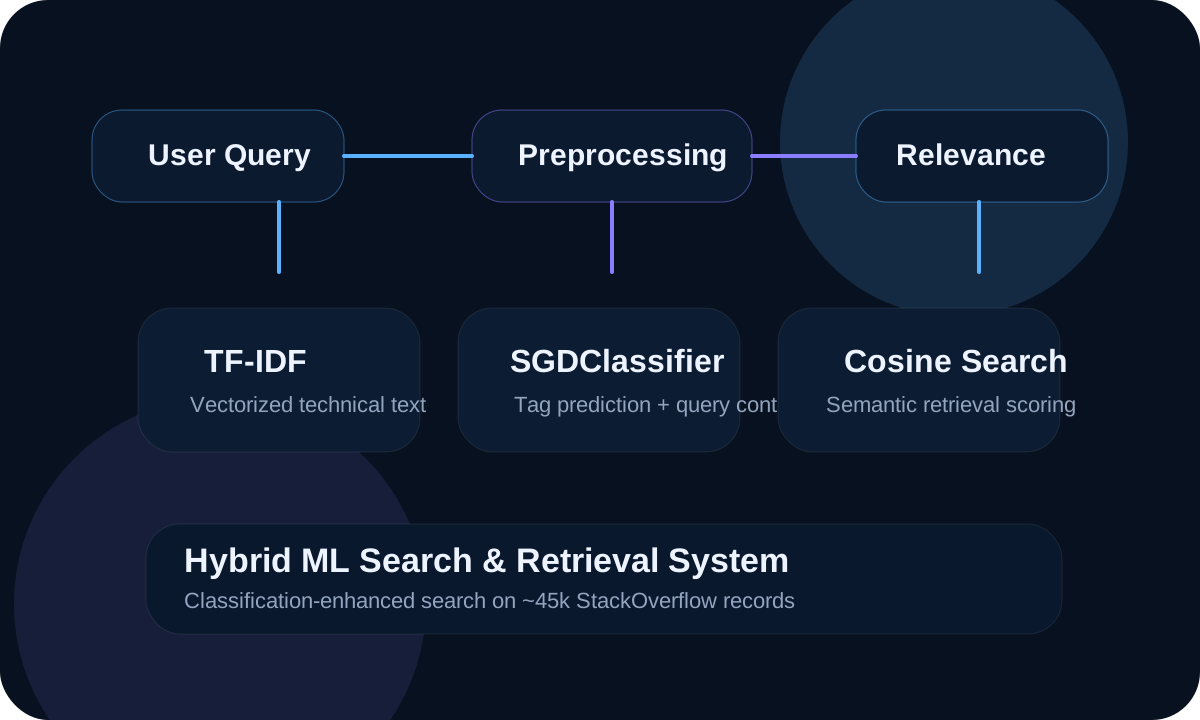
A 2-stage hybrid retrieval system trained on 45,000 StackOverflow records — SGD-based tag prediction for query expansion feeding into TF-IDF vectorization with cosine similarity ranking.
A machine learning search system built on ~45,000 StackOverflow records. The key insight was that a single retrieval technique misses intent — so the pipeline runs in 2 stages: classify the query to predict missing context tags, then use those enriched tags to improve the similarity search.
45K+
Training records
2-stage
Hybrid retrieval pipeline
SGD + TF-IDF
Model combination
Architecture highlights
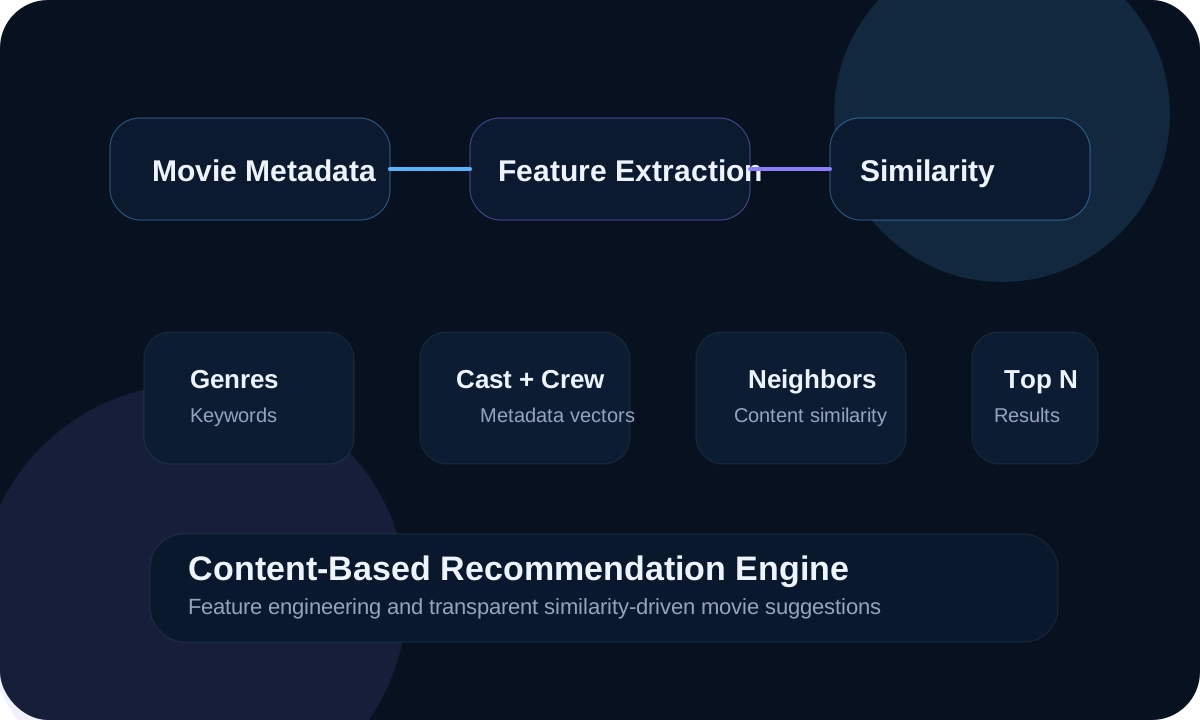
A 3-stage content-based recommendation pipeline — metadata extraction, vector representation, and cosine similarity scoring — that generates explainable suggestions with no user interaction data required.
A content-based recommender that processes movie metadata through 3 explicit pipeline stages: feature extraction, vector representation, and similarity scoring. The design prioritizes explainability — every suggestion is traceable to specific shared metadata signals rather than opaque collaborative filtering.
3
Pipeline stages
Content-based
No user data needed
Explainable
Traceable recommendations
Architecture highlights
